 Ukrainian
 Polish
 Slovak
 Czech
Czech Romanian
 Irish
Irish Hungarian
 Russian
 Hindi
Hindi Portuguese

Scans and Tests During Pregnancy
Routine Antenatal Checks
Blood Tests, Urine Tests
Dating Scan
Throughout your pregnancy, you’ll be offered a range of scans and tests to monitor your health and your baby’s development. These routine checks help your maternity team identify any concerns early and ensure you receive the most appropriate care.
Some tests are offered to everyone, while others may only be recommended if you have certain risk factors or if further investigation is needed.
Your midwife or doctor will explain each test, what it involves and why it is being offered. You can ask questions at any time before deciding whether to have a test.
Routine-antenatal-tests
At each antenatal appointment, your midwife or doctor will carry out routine checks to monitor your wellbeing and your baby’s growth.
These may include:
* Measuring your blood pressure
* Testing your urine
* Asking about your baby’s movements (later in pregnancy)
* Measuring your baby’s growth by feeling your abdomen (from around 24 weeks)
* Listening to your baby’s heartbeat when appropriate
These regular checks help identify conditions such as high blood pressure, pre-eclampsia or signs that your baby may need additional monitoring.
Blood Tests
You will be offered several blood tests during pregnancy.
These may include tests to:
* Determine your blood group and rhesus (Rh) status
* Check your iron levels
* Screen for anaemia
* Check immunity to certain infections
* Screen for infections such as HIV, hepatitis B and syphilis
Some women may also be offered additional blood tests depending on their medical history or family history.
Your healthcare professional will explain your results and discuss any further care if needed.
Urine Tests
You’ll usually be asked to provide a urine sample at each antenatal visit.
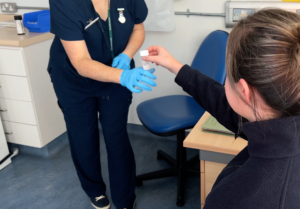
Urine Test
Urine tests help check for:
* Protein, which may be a sign of pre-eclampsia
* Sugar (glucose), which may indicate the need for further testing for gestational diabetes
* Signs of a urinary tract infection
If an infection is suspected, you may need additional urine tests or treatment.
Dating Scan
Most women are offered an ultrasound scan in early pregnancy, usually between 10 and 14 weeks.
The dating scan is used to:
* Confirm your baby’s due date
* Check that your pregnancy is developing in the uterus
* Confirm whether you are expecting one baby or more than one baby
* Assess your baby’s heartbeat
The exact timing may vary depending on your maternity hospital.
Anatomy (20-Week) Scan
Most maternity hospitals offer a detailed ultrasound scan between 18 and 22 weeks of pregnancy.
This scan carefully examines your baby’s development, including:
* Brain
* Spine 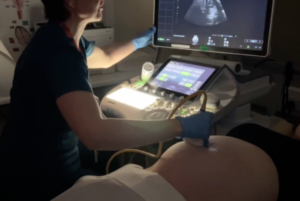
* Heart
* Kidneys
* Limbs
* Face
* Abdomen
The scan also checks:
* The position of the placenta
* The amount of amniotic fluid
* Your baby’s growth
Although the anatomy scan can identify many structural conditions, it cannot detect every possible condition or abnormality.
Screening Tests
Screening tests help estimate the chance that your baby may have certain conditions. Screening does not provide a diagnosis.
Your healthcare team will explain:
* What each screening test looks for
* The benefits and limitations
* What the results may mean
* Whether further testing is recommended
You can choose whether or not to have screening tests.
Non-Invasive Prenatal Testing (NIPT)
Some women choose to have Non-Invasive Prenatal Testing (NIPT).
NIPT is a blood test that analyses small amounts of your baby’s DNA circulating in your blood to estimate the chance of certain chromosome conditions, including:
* Down syndrome (Trisomy 21)
* Edwards syndrome (Trisomy 18)
* Patau syndrome (Trisomy 13)
NIPT is a screening test, not a diagnostic test. If the result suggests a higher chance of one of these conditions, you may be offered further diagnostic testing.
NIPT is not routinely provided as part of public maternity care in Ireland.
Diagnostic Tests
If a screening test or ultrasound suggests that further investigation is needed, you may be offered diagnostic tests such as:
Chorionic Villus Sampling (CVS)
CVS is usually performed between 11 and 14 weeks of pregnancy.
A small sample of placental tissue is taken and tested for certain genetic or chromosomal conditions.
Amniocentesis
Amniocentesis is usually performed after 15 weeks of pregnancy.
A small sample of the amniotic fluid surrounding your baby is removed and analysed.
Both CVS and amniocentesis provide more definite answers than screening tests but carry a small risk of miscarriage. Your doctor will discuss the benefits and risks before you decide whether to proceed.
Screening for Gestational Diabetes
Some women are offered an oral glucose tolerance test (OGTT) to check for gestational diabetes.
You may be offered this test if you have certain risk factors, such as:
* A previous pregnancy affected by gestational diabetes
* A higher body mass index (BMI)
* A family history of diabetes
* Certain ethnic backgrounds associated with an increased risk
* Sugar detected in your urine during pregnancy
The test usually takes place between 24 and 28 weeks of pregnancy.
Additional Ultrasound Scans
Some women will need extra ultrasound scans during pregnancy.
Additional scans may be recommended if:
* Your baby is measuring smaller or larger than expected
* You are expecting twins or more
* You have certain medical conditions
* There are concerns about your baby’s growth
* There are concerns about the placenta or amniotic fluid
These scans help your maternity team plan the safest care for you and your baby.
Can I Decline a Test?
Yes. You have the right to decide whether to have any screening or diagnostic test during pregnancy.
Before any test, your healthcare professional will explain:
* Why it is being offered
* What it involves
* The possible benefits
* Any risks
* What the results may mean
If you have questions, ask your midwife or doctor—they are there to help you make an informed decision.
Key Points
* Routine blood pressure and urine checks are carried out throughout pregnancy.
* Blood tests help monitor your health and screen for certain conditions.
* A dating scan is usually offered between 10 and 14 weeks.
* An anatomy scan is usually offered between 18 and 22 weeks.
* Screening tests estimate the chance of certain conditions but do not provide a diagnosis.
* CVS and amniocentesis are diagnostic tests offered in specific circumstances.
* Some women may need additional scans or tests depending on their pregnancy.
* Your healthcare team will explain every test and answer any questions before you decide whether to proceed.