 Ukrainian
 Polish
 Slovak
 Czech
Czech Romanian
 Irish
Irish Hungarian
 Russian
 Hindi
Hindi Portuguese
To Prepare a Formula Feed
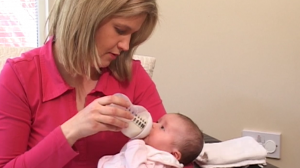
Wash and dry your hands before handling sterilised equipment. Use sterile tongs where possible and avoid touching the parts that will come into contact with the formula or your baby’s mouth.
It is best to leave equipment inside the steriliser or covered saucepan until needed. Bottles that are assembled correctly with tightly fitting caps or sealing discs can remain sterile for up to 24 hours, provided they stay closed.
Do not use ultraviolet or UV sterilisers. The HSE advises that there is not enough evidence to show that these devices are safe and effective for sterilising infant feeding equipment.
How to Make a Formula Feed
It is safest to prepare a fresh bottle each time your baby needs a feed.
Powdered formula must be made using water that is at least 70°C. Water at this temperature helps reduce the risk from bacteria that may be present in the formula powder.
Step-by-Step Guide
Empty the kettle and refill it with 1 litre of freshly drawn cold tap water.
Bring the water to the boil.
Leave the boiled water to cool in the kettle for no longer than 30 minutes. This should keep the water at a temperature of at least 70°C.
Clean and disinfect the work surface.
Wash your hands with soap and warm water and dry them using a clean towel.
Check the instructions on the formula packaging to find out exactly how much water and powder are required.
Pour the correct amount of hot water into a sterilised bottle. Be careful, as water at 70°C can cause scalds.
Using only the scoop supplied with the formula, add the exact number of level scoops stated on the packaging.
Replace the bottle lid and shake the bottle until the powder is fully dissolved.
Cool the bottle by holding it under cold running water or placing it in a bowl of cold water. Keep the water below the neck of the bottle.
Shake the bottle and place a drop of milk on the inside of your wrist. It should feel lukewarm, not hot.
Give the feed to your baby as soon as it has cooled to a safe temperature.
Always Measure Formula Carefully
Always put the measured water into the bottle before adding the formula powder.
Use the exact amount of water and the exact number of level scoops stated on the packaging. Adding too much powder can make the feed overly concentrated, while adding too little powder or extra water may mean your baby does not receive enough nutrients.
Never add extra formula powder, cereal, sugar or any other ingredient to your baby’s bottle unless specifically instructed by a healthcare professional.
Water for Formula Feeds
Use freshly drawn cold tap water from the kitchen tap where the water supply is safe.
Do not use:
Water that has already been boiled.
Artificially softened water, as it may contain too much sodium.
Sparkling water.
Hot water directly from the tap.
When bottled water must be used, choose still water and boil it before preparing the feed. Avoid bottled water labelled “natural mineral water”, as it may contain unsuitable levels of sodium or other minerals.
How to Formula Feed Your Baby
Bottle feeds are an opportunity to hold your baby close, respond to their needs and support bonding.
Before starting: 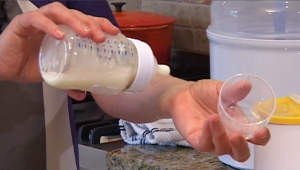
Check that the milk is lukewarm.
Sit in a safe and comfortable position.
Hold your baby close in your arms.
Make sure the teat is full of milk to reduce the amount of air your baby swallows.
Always hold both your baby and the bottle throughout the feed.
Never prop the bottle against a pillow or leave your baby feeding alone. Bottle propping can cause choking and means that your baby cannot control the flow of milk.
Paced Bottle Feeding
Paced bottle feeding allows your baby to control how quickly they drink and how much milk they take.
To pace a bottle feed:
Hold your baby in a comfortable, fairly upright position.
Hold the bottle almost horizontally rather than pointing it directly downwards.
Gently touch the teat against your baby’s upper lip and allow them to open their mouth and take the teat.
Tilt the bottle just enough to keep the teat filled with milk.
Watch your baby and pause when they pause.
Tilt the bottle downwards or briefly remove the teat to give your baby a rest.
Continue at your baby’s pace.
Stop when your baby shows signs that they have had enough.
Do not rush the feed or try to make your baby finish the bottle. Paced feeding can help reduce the risk of overfeeding and makes bottle feeding more comfortable for your baby.
Signs Your Baby Is Hungry
Early feeding cues may include:
Stirring or becoming more alert.
Turning their head and opening their mouth.
Rooting or searching for the teat.
Sucking their hands or fingers.
Making sucking movements.
Crying is often a later sign of hunger.
Signs Your Baby Has Had Enough
Your baby may:
Slow down or stop sucking.
Turn their head away.
Push the teat out with their tongue.
Relax their hands.
Close their mouth.
Become sleepy or lose interest.
Respond to these signs and do not force your baby to finish the bottle.
Storing Formula Feeds
Preparing a fresh feed when your baby needs it is the safest option because bacteria can grow quickly in warm formula.
When a feed must be prepared in advance:
Prepare it safely using water that is at least 70°C.
Cool the bottle quickly.
Place it at the back of the fridge as soon as it has cooled.
Make sure the fridge is at 5°C or below.
Use the feed within 24 hours.
Throw away any feed that has not been used within that time.
Do not store bottles in the fridge door, as the temperature changes whenever the door is opened.
Warming a Refrigerated Feed
Formula does not have to be warmed if your baby is happy to drink it cool.
To warm a refrigerated bottle:
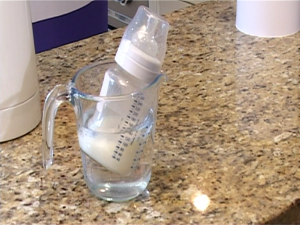
Take it from the fridge just before it is needed.
Place it in a bowl of warm water, keeping the water below the bottle’s neck, or use a suitable bottle warmer.
Do not warm the bottle for longer than 15 minutes.
Shake the bottle and check a drop on the inside of your wrist.
Never use a microwave to heat formula. Microwaves can heat milk unevenly and create hot spots that could scald your baby’s mouth.
Leftover Formula
Throw away any formula that your baby has not taken within 2 hours of starting the feed. Bacteria from your baby’s mouth can enter the bottle during feeding and multiply in the remaining milk.
Never:
Save leftover formula for the next feed.
Reheat a partially used bottle.
Add fresh formula to an unfinished feed.
For a baby who regularly takes longer than 2 hours to feed, prepare a fresh bottle after the 2-hour period.
Winding Your Baby
Babies can swallow small amounts of air while feeding. This may make them uncomfortable, although not every baby needs to bring up wind after every feed.
You can try winding your baby:
During a natural pause in the feed.
When changing sides or positions.
At the end of the feed.
Whenever your baby appears uncomfortable.
Over Your Shoulder
Hold your baby upright against your chest with their chin resting near your shoulder. Support their head and gently rub or pat their back.
Sitting on Your Lap
Sit your baby upright on your lap. Support their chest and head with one hand, keeping their chin supported without pressing on their throat. Gently rub or pat their back with your other hand.
Lying Across Your Lap
Lay your baby face down across your lap, supporting their head and keeping it slightly higher than their chest. Gently rub or pat their back.
 Face down, on your lap
You do not need to continue winding for a long time if your baby appears settled. Some babies bring up wind easily, while others may not burp at all.
It is normal for a baby to bring up a small amount of milk during or after a feed. Speak to your public health nurse or GP if your baby is frequently vomiting large amounts, appears distressed, refuses feeds or is not gaining weight as expected.
Getting Help
Contact your midwife, public health nurse or GP if:
You are unsure how to prepare formula safely.
Your baby regularly refuses feeds.
Your baby is very sleepy or difficult to wake for feeds.
Feeding takes a very long time.
Your baby frequently coughs, chokes or struggles during feeds.
Your baby has fewer wet nappies than expected.
You are concerned about vomiting, constipation or an allergy.
Your baby is not gaining weight as expected.
Your maternity team or public health nurse can observe a feed and help you with bottle choice, teat flow, positioning and paced feeding.